Purpose
In 2026, the David Johnstone Pukemokemoke Bush Trust was successful in their application to the Waikato Environmental Education Fund regarding their Pekapeka Bat Evening. The evening is aimed to be fun but also informative. Students will learn all about Pekapeka (New Zealand native long tailed bats) which are critically endangered. They will get a chance to use monitors to locate bats in the area and hopefully they may see some.
Overview
In conjunction with Go Eco we are organising an educational fun evening at Pukemokemoke Bush Reserve on 27th February 2026. We are inviting families from Tauhei, Orini and Whitikahu Schools to come along with a picnic in the early evening. This will be followed by a talk given by Go Eco’s Paul Murray and Gerry Kessels from Blue Wattle Ecology who has been monitoring bats at Pukemokemoke since 2012. Participants will be able to use monitors supplied by Go Eco to trace signs of bat activity after sunset.
Go Eco Reel
Go Eco Waikato’s Instagram Reel on Pekapeka Bat Evening.
Report
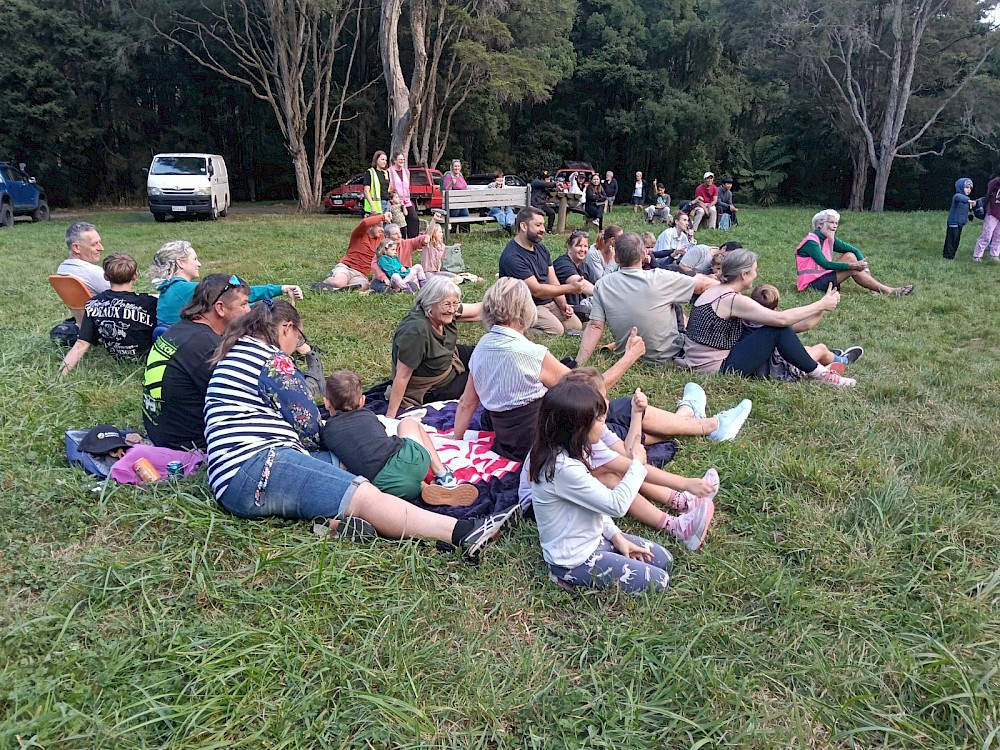
On Friday 27th February 2026 the Trustees of the David Johnstone Pukemokemoke Bush Trust held a Pekapeka Bat Evening at the Reserve. It was an extremely successful event run in conjunction with Paul Murray and Krissy Barnes from Go Eco and Gerry Kessels from Blue Wattle Ecology.
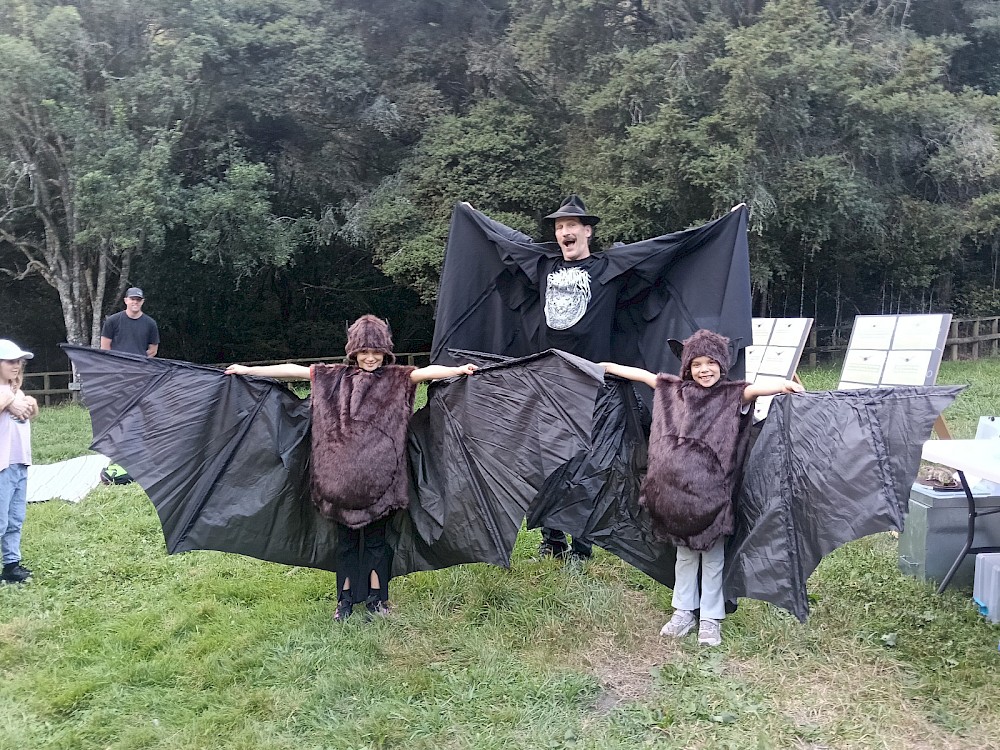
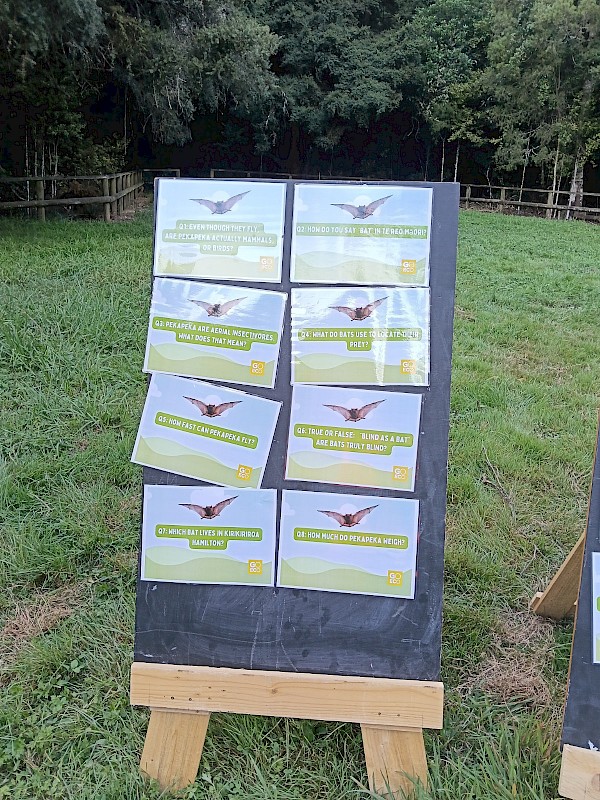
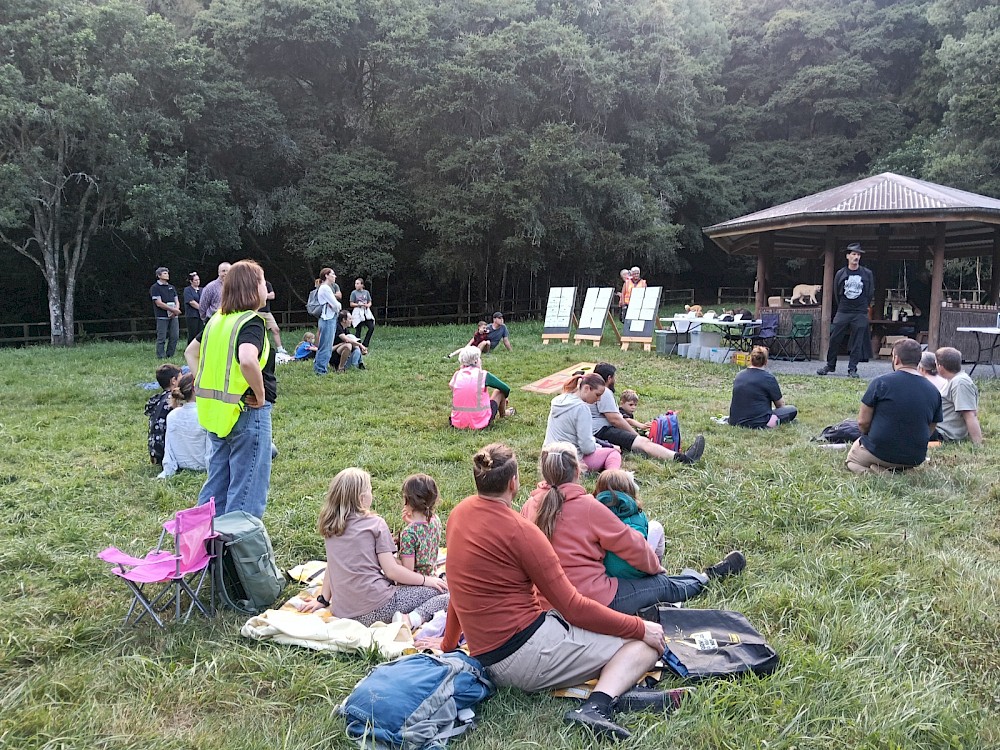
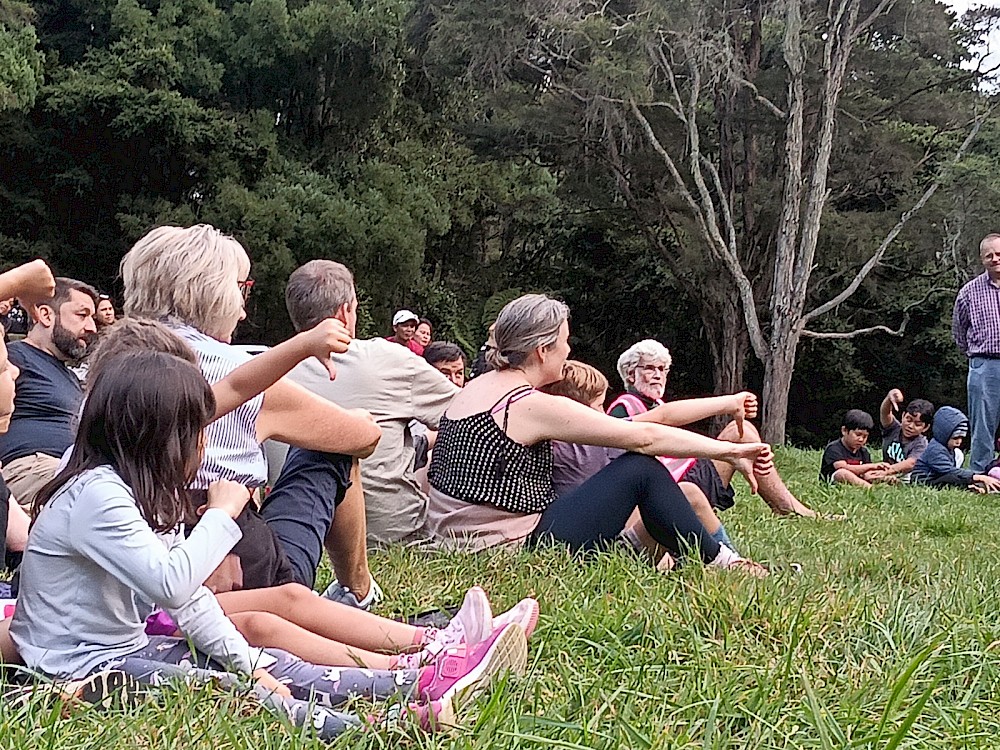
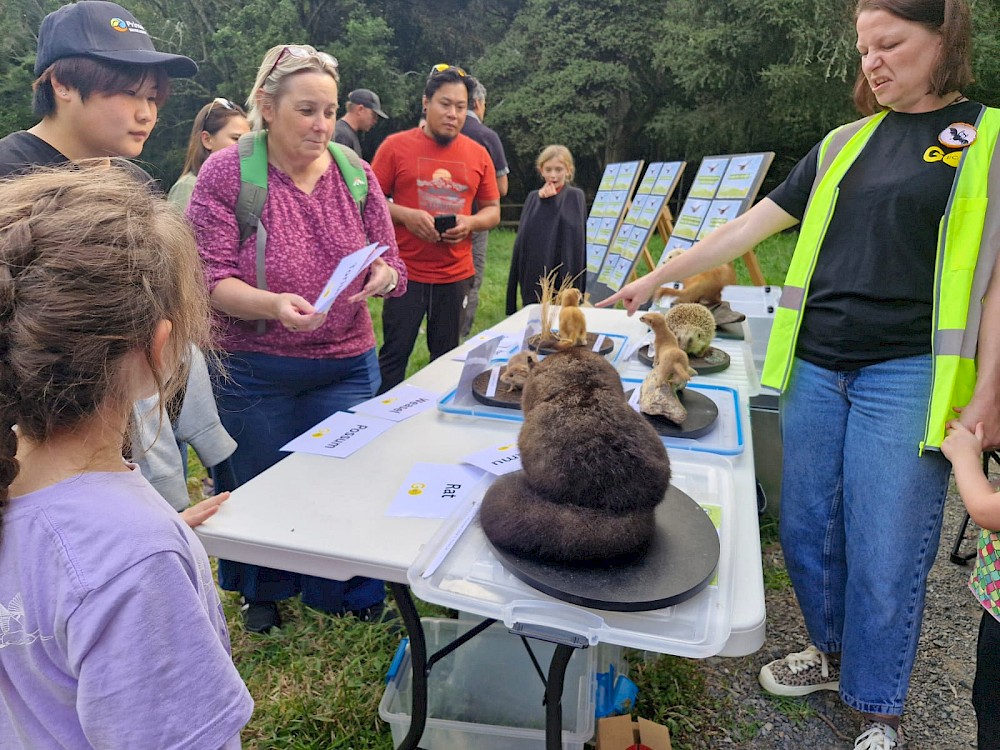
Local schools were invited to this free (ticketed) event. The weather thankfully was good and everyone enjoyed their picnics in the Log Hauler Site. Paul brought along some bat costumes, taxidermied pests (including a rat, weasel, stoat, hedgehog, possum and feral cat) as well as other educational aids. His entertaining presentation challenged the audience with questions about the pekapeka (long tailed bat) which is nationally critically threatened i.e. they are in danger of extinction if we do not protect them. This is why we need to protect them against predators – Paul pointed out captured feral cats have been found to have as many as 100 bats in their stomach!
His questions included interesting facts such as how much do they weigh (same as a $2 coin), how fast can they fly (60kmph) and how far do they travel in a night (up to 100km). We were impressed by how much the audience knew about pekapeka already but everyone certainly learned a lot more by the end of the evening.
Following Paul’s presentation Gerry who monitors the bats at Pukemokemoke on behalf of Stephenson’s quarry showed everyone the various instruments that are used in his profession and talked about his work with bats in various parts of the country.
After the talks had finished 13 bat monitors were distributed between the 60 attendees and everyone waited quietly for the bats to appear. We were not disappointed because just half an hour after sunset the monitors picked up the bat movements by making a splatty popcorny sound. As the bats flew over the Log Hauler Site each monitor picked up the sound. Not only could we hear them on the monitors but could see their zig zaggy flight. They are very small (only 20cm wingspan and their bodies are only as long as a pinky finger) but it was possible to see them clearly against the evening sky.
Everyone seemed to enjoy the evening immensely and were very excited to see and hear the pekapeka after learning all about them.
David Johnstone Pukemokemoke Bush Trust